
What Seasoned Meteorite Collectors Never Tell Beginners
The world of meteorite collecting is one of the most rewarding hobbies on Earth — quite literally. You are holding a piece of space history, a fragment that traveled billions of kilometers before landing in a remote desert or open field. Yet for all its romance, the community of serious collectors guards its most valuable knowledge fiercely. From the best hunting grounds to the tricks for spotting a genuine specimen, insiders keep their edges sharp by keeping newcomers in the dark. This guide is different — we are pulling back the curtain on the secrets that experienced meteorite collectors use every day.
Whether you are just building your first collection or have been at it for years, understanding the hidden mechanics of this hobby will change the way you hunt, authenticate, and acquire specimens. And just like seasoned players who scrutinize casino review ratings carefully before committing real money to a platform, smart meteorite collectors do their homework long before they ever put a specimen in their cart. The research discipline that separates elite collectors from casual enthusiasts applies equally to every high-stakes decision you make.
The Real Science Behind Finding Meteorites in the Field
Reading Terrain Like a Professional Hunter
Most beginner guides tell you to look for dark rocks in open fields. That barely scratches the surface. Professional hunters spend weeks studying satellite imagery, geological surveys, and historical strewn-field data before they set foot on any location. The key is understanding the concept of the strewn field — the elliptical pattern in which meteorite fragments scatter after atmospheric entry. The largest pieces fall farthest from the entry point; smaller fragments land closer to the impact origin. Knowing this inverts your search strategy entirely and allows you to prioritize the most productive zones on your first visit.
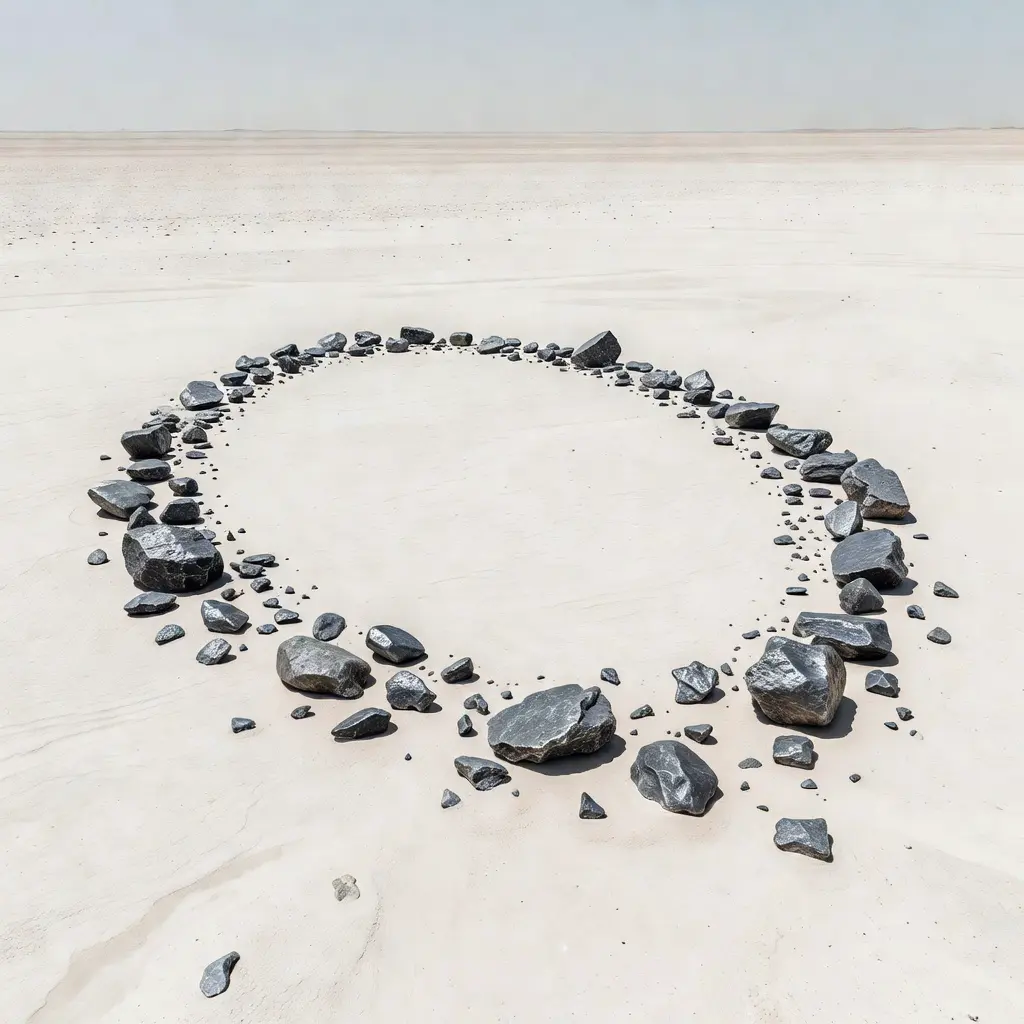
Experienced collectors also leverage weather erosion patterns strategically. In hot desert environments like the Sahara or Atacama, wind strips away sediment over decades, slowly exposing meteorites buried for centuries. If you know where prevailing winds came from 200 years ago, you know where to look today. For anyone serious about building a collection that holds value, mastering the art of authenticating meteorite specimens is as fundamental as learning to navigate the terrain itself.
The Equipment Professionals Actually Use
Walk into any beginner forum and you will see the same recommendation: buy a cheap metal detector and head outside. What they will not tell you is that entry-level detectors miss iron-nickel meteorites buried more than fifteen centimetres deep, and they produce so many false positives in mineralised soils that most hunters end up digging hundreds of holes for nothing. The professionals use pulse induction detectors with custom discrimination settings, and many invest in ground-penetrating radar for high-value search zones where the cost of missing a specimen outweighs the equipment outlay.
The same principle of smart investment applies across disciplines. Collectors who also enjoy online gaming know that reading detailed casino review ratings carefully before choosing a platform pays dividends in exactly the same way — you avoid platforms with poor payout histories and identify ones with genuinely generous reward structures. The research habit that makes an elite meteorite hunter also makes a disciplined player who never leaves value on the table.
- Pulse induction metal detectors — the professional standard for deep detection in mineralised soil
- Neodymium magnets on a retractable pole for efficient surface sweeping over large areas
- UV flashlights to spot fusion crust variations and weathering halos after dark
- Portable specific gravity kits for rapid field density checks before committing to excavation
- GPS logging devices to map exact find coordinates for strewn-field modelling
- Freeze-dried silica gel pouches to prevent oxidation on iron meteorites during transport
Authentication Secrets the Dealers Keep to Themselves
The meteorite market has a persistent problem: a significant percentage of specimens sold at gem fairs, online marketplaces, and even some reputable dealers are misidentified terrestrial rocks. The issue is not always malicious — sometimes sellers genuinely believe they have a meteorite. But the result is the same: collectors pay meteorite prices for ordinary iron-rich basalt or magnetite nodules. Knowing how to authenticate a specimen yourself is not just useful — in a market this opaque, it is essential for financial survival as a collector.
The Fusion Crust Test and Its Critical Limitations
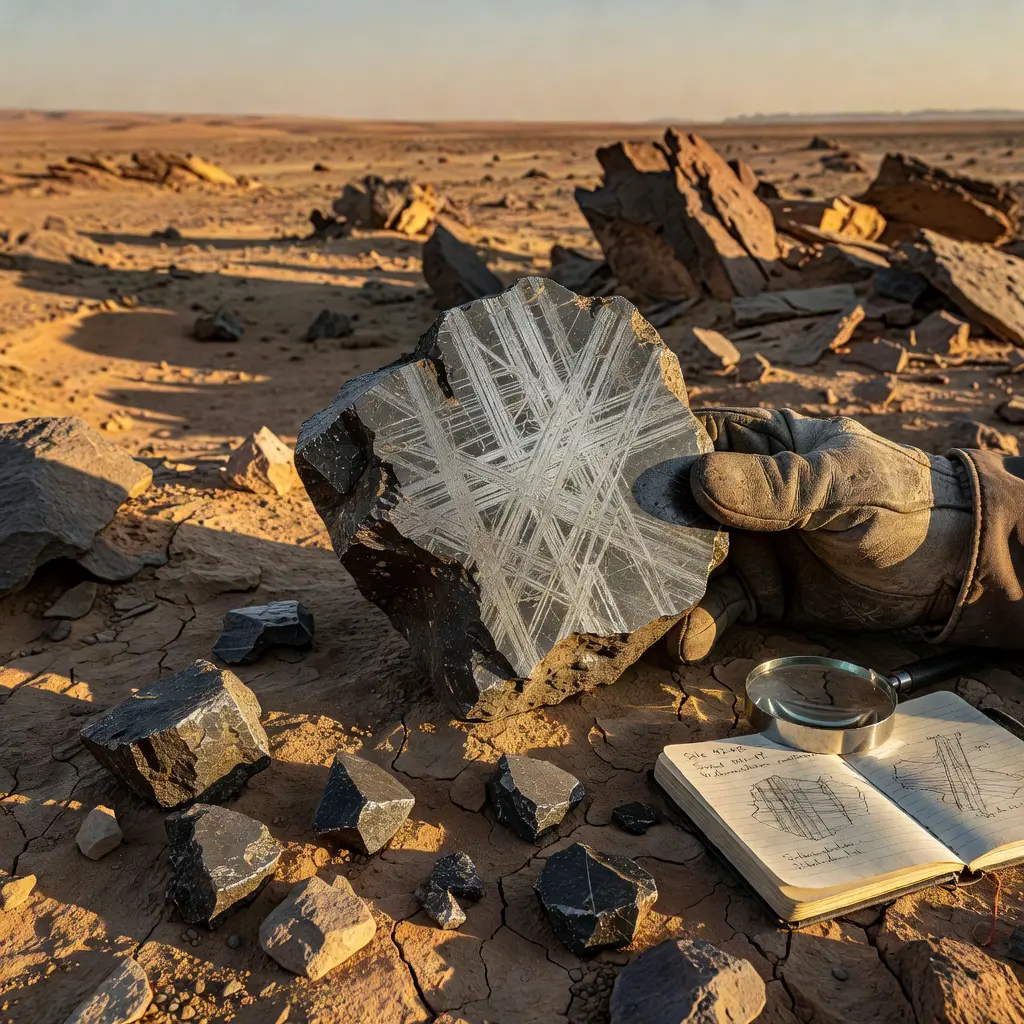
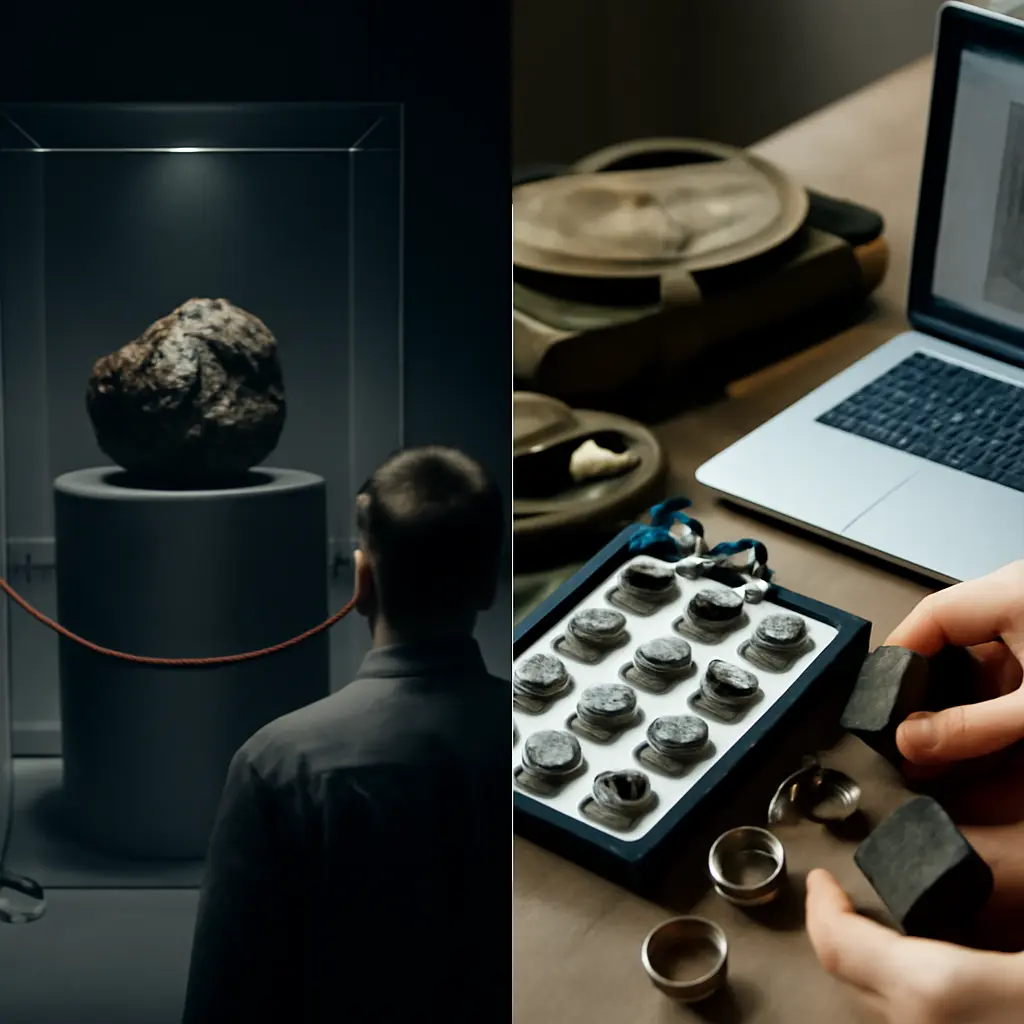
Every guide mentions the fusion crust — the thin, glassy black coating formed when a meteorite superheats during atmospheric entry. But here is what they leave out: fusion crust weathers off within a few hundred years of terrestrial exposure. Any meteorite found in a moist environment will show rust-brown oxidation rather than the black glass that textbooks describe. Professionals look for the underlying Widmanstätten pattern on iron meteorites and chondrules in stony types, visible even through heavy weathering with appropriate magnification and raking light.
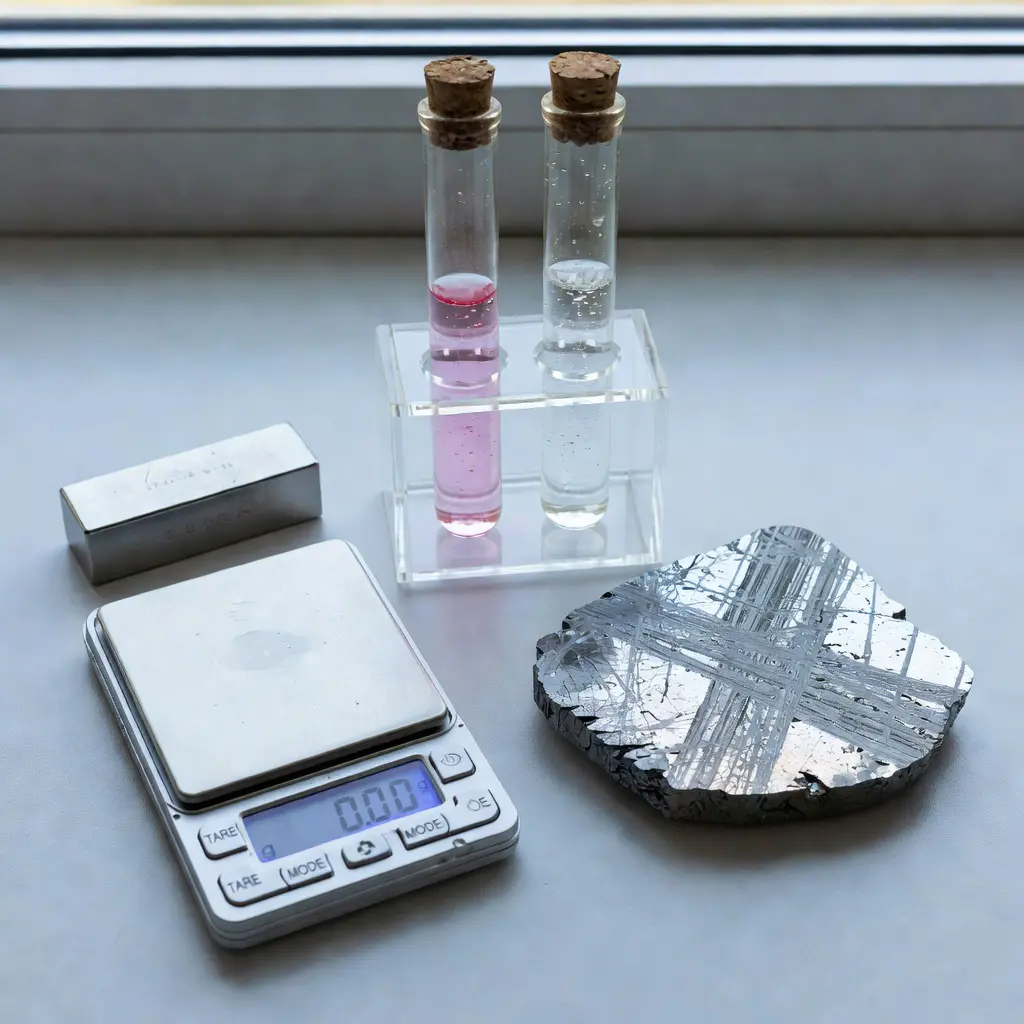
Density is another grossly underused test. Most chondrites have a density between 3.2 and 3.8 g/cm³, significantly heavier than common terrestrial rocks of similar size. A simple water displacement measurement with a kitchen scale eliminates a large percentage of fakes before you spend money on laboratory analysis. Smart collectors build a rapid-triage protocol with the same rigour they apply when reviewing casino review ratings — establishing a systematic checklist that filters poor options before any commitment of real resources.
The Nickel Test: Why Field Labs Don't Advertise It
Laboratory confirmation via nickel testing is the gold standard, but a field-grade dimethylglyoxime test — available from chemistry suppliers for a few euros — detects nickel in under two minutes. Most iron-bearing terrestrial rocks contain little to no nickel; iron meteorites typically carry 5 to 20 percent nickel content by weight. A positive field test does not confirm a meteorite definitively, but a negative test on a suspected iron meteorite is a very strong indicator you have found something terrestrial. Most dealers selling at gem fairs do not carry these kits for an obvious reason — informed buyers are harder to exploit.
The comparison table below summarises the most reliable field and laboratory authentication methods along with their approximate accuracy rates when applied correctly to a range of meteorite types:
| Test Method | Equipment Needed | Accuracy Rate | Time Required |
|---|---|---|---|
| Magnetic attraction | Neodymium magnet | ~85% (excludes achondrites) | 30 seconds |
| Density measurement | Scale and water vessel | ~75% | 5 minutes |
| Nickel field test (DMG) | Dimethylglyoxime reagent kit | ~90% for irons | 2 minutes |
| Visual fusion crust inspection | Magnifying loupe 10x | ~60% | 2 minutes |
| Laboratory ICP-MS analysis | Accredited lab submission | ~99% | 2 to 4 weeks |
Free Spiny Zdarma and the Collector's Advantage Mindset
One of the most underappreciated strategies among dedicated hobbyists — whether they hunt meteorites, collect vintage coins, or pursue rare stamps — is the disciplined use of bonus capital to extend their acquisition budget. Meteorite hunting involves real costs: travel, professional-grade equipment, laboratory fees, and competitive specimen purchases at auction. Collectors who supplement their hobby budget through smart participation in promotional offers gain a meaningful financial edge. This is precisely where free spiny zdarma becomes relevant — these no-deposit free spins offered by online casinos allow you to build a bonus bankroll without touching the core funds reserved for collecting.
The concept works similarly to finding a meteorite at an overlooked location: the value is entirely real, but you need to know where to look and how to handle the opportunity correctly. Wagering requirements, game contribution percentages, and withdrawal limits all materially affect the practical worth of any free spins offer. Reading detailed casino review ratings before claiming any promotion is the difference between a genuinely useful bonus and a frustrating experience with funds you cannot convert into anything meaningful.
How to Evaluate Casino Bonuses With the Same Logic You Apply to Meteorite Deals
A skilled meteorite collector never pays asking price without independent verification. The same analytical logic applies to online casino promotions. When reviewing a bonus proposition, ask the same questions you would ask about a meteorite purchase: Who is the source? What do independent auditors say? What do other participants report about the actual experience? There is a well-developed ecosystem of review platforms providing comprehensive bonusy v online kasinech that evaluate platforms systematically, examining withdrawal speed, bonus fairness, game selection, and customer support quality in measurable terms.
The parallel between meteorite dealing and casino platform selection is more than superficial. Both operate in markets where asymmetric information heavily favours the seller unless the buyer is thoroughly educated. The experienced collector builds a network of trusted sources, verified reviews, and personal testing protocols before committing significant resources. The experienced casino participant does exactly the same — relying on platforms that have been independently audited, rated for fairness, and vetted by a community of active users with verifiable track records.
- Check the wagering requirement first — anything above 40x the bonus amount is generally unfavourable
- Verify game contribution percentages — free spins locked to low-RTP slots reduce effective bonus value significantly
- Read the withdrawal limit terms — some bonuses cap what you can withdraw to a fraction of the advertised amount
- Review time restrictions carefully — bonus expiry windows of 24 to 72 hours are deliberately tight to prevent considered play
- Consult multiple casino review ratings sources — never rely on the operator's own promotional material
- Look for verified payout records from independent watchdog organisations, just as you would check a meteorite seller's transaction history on specialist forums
Building a Serious Collection Without Depleting Your Budget
The Secondary Market and Where Real Value Hides
The meteorite secondary market — private sales, estate auctions, and specialist collector forums — offers substantially better value than retail dealers in the majority of cases. Provenance-verified specimens that passed through respected collections command a premium at major auction houses, but unknown or freshly classified material offered through private channels can be acquired at 30 to 50 percent below retail. The critical skill is knowing how to read a listing, verify documentation, and assess condition accurately from photographs and seller descriptions alone before committing to a purchase.
For collectors ready to expand beyond familiar search zones, identifying little-known hunting spots can dramatically increase find rates without proportionally raising travel costs. Some of the most productive zones in Central Europe, for instance, sit within day-trip distance of major cities but receive almost no hunting pressure because they remain poorly documented in English-language resources — a significant advantage for collectors willing to do cross-language research.
Patience is the secondary market's most valuable currency. Experienced collectors often monitor specific sellers for months before moving on a target specimen, timing their offers to coincide with moments when sellers face liquidity pressure. This approach mirrors how the most successful casino review ratings users track platform promotions over time, waiting for genuinely high-value offers rather than accepting every marginal deal that crosses their feed.
Combining Smart Bonus Strategies With Collecting Goals
A growing number of serious collectors openly discuss using online casino bonus promotions as a supplementary funding stream for acquisitions. The approach requires genuine discipline and a clear-eyed understanding of probability mathematics, but when executed correctly — selecting only highly rated platforms, claiming exclusively high-value promotions, and maintaining strict session limits — it can produce a modest but consistent supplementary acquisition fund. For those interested in exploring this approach systematically, find the best-rated platforms here, a resource that ranks casinos specifically by bonus quality, transparency, and verified withdrawal reliability.
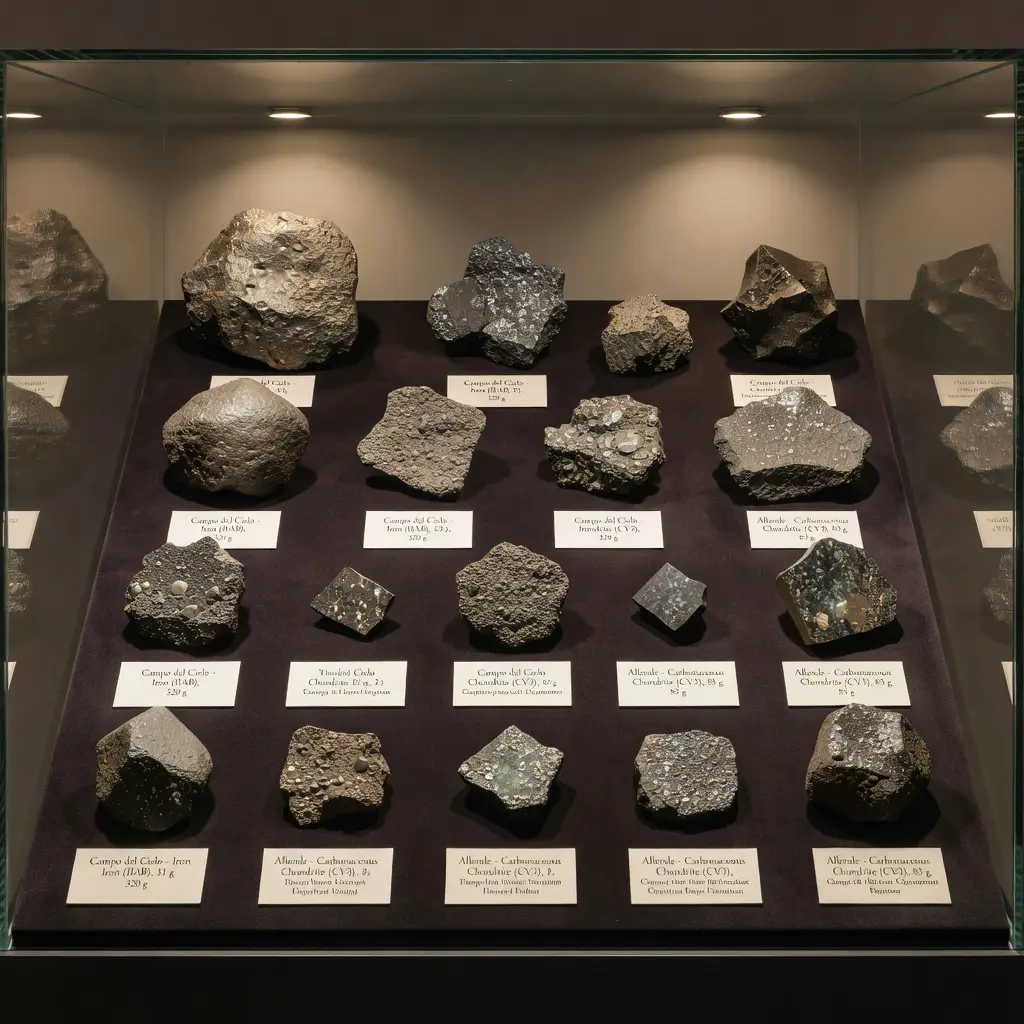
The casino review ratings ecosystem has matured considerably over the past decade. Independent testing laboratories now verify random number generator fairness, licensed jurisdictions enforce player protection standards, and responsible gambling certifications have become a meaningful quality signal that separates trustworthy operators from exploitative ones. Just as the Meteoritical Society maintains a publicly searchable database of officially classified meteorites, the regulated casino sector now offers comparable transparency for players who know which independent sources to consult.
Legal Frameworks and Ethical Responsibilities Every Collector Must Understand
Perhaps the most closely guarded knowledge in the meteorite community concerns legal ownership and collection rights. In many countries, meteorites found on private land belong to the landowner, not the finder. In others, all meteorites recovered from public land are classified as state property by cultural heritage legislation. The legal landscape varies dramatically across jurisdictions, and several high-profile cases over the past decade have resulted in specimen confiscation and criminal charges against collectors who failed to navigate local regulations correctly — often through innocent ignorance rather than intentional violation.
- In the United States, meteorites found on federal land belong to the government; those on private land belong to the landowner, with finder rights depending entirely on prior written agreements
- Namibia and Morocco have enacted national heritage legislation that makes commercial collection without specific government permits legally precarious for foreign collectors
- In most EU countries, the legal framework is determined at the national level — Germany and Austria treat meteorites as personal property when found on private land with documented landowner consent
- The Antarctic Treaty System prohibits removal of any geological material including meteorites from the continent without specific scientific authorization and permitting
- Several major online auction platforms now require documented provenance for meteorite listings exceeding certain value thresholds to prevent trafficking of illegally sourced material
Ethical collecting also means actively supporting classification efforts. Submitting a representative sample of any unclassified find to an accredited meteoritics laboratory for formal classification benefits the entire scientific community and simultaneously increases the specimen's market value if you choose to sell. The casino review ratings parallel holds here too: just as a transparent, well-documented operator earns better independent ratings and stronger community trust over time, a meteorite with a clean provenance chain and official classification commands higher prices and faster transactions on every major platform.
Conclusion: Applying Expert-Level Logic to Every Collecting Decision
The secrets that experienced meteorite collectors protect most carefully are not dramatic revelations reserved for the privileged few — they are the accumulated result of systematic research, disciplined methodology, and deliberate practice applied consistently over time. Reading terrain intelligently using strewn-field modelling, authenticating rigorously with a layered multi-test protocol, understanding the legal framework in your target regions, and building a budget strategy that supports serious acquisition all require the same underlying skill: the ability to evaluate information sources critically, verify claims independently, and act decisively when a genuine opportunity appears.
Whether you are applying this mindset to a new search location, evaluating a secondary market listing, or assessing a casino platform offering compelling free spin promotions, the core discipline remains identical. Trust verified data over marketing claims, maintain meticulous records of every transaction and find, consult independent casino review ratings or equivalent expert sources for every major decision, and never allow enthusiasm to override critical analysis. The collectors who consistently find, authenticate, and acquire the finest specimens are not the luckiest — they are simply the most prepared and the most systematic in everything they do.
Start by building your own authentication protocol from the methods outlined here, invest in equipment that professional hunters actually use, familiarise yourself with the legal framework in your target territories, and approach every new platform — whether a meteorite dealer, an auction house, or an online casino offering bonus promotions — with the same rigorous evaluation checklist. The experts guard these secrets because they genuinely work. Now you have access to every one of them.


Comments
That bit about fusion crust weathering off in moist areas surprised me—so a rusty brown surface doesn’t automatically mean “fake”? I’ve been passing on a few finds because they didn’t have the black crust everyone talks about.
That bit about fusion crust weathering off in moist climates is reassuring—I’ve had a rusty “meteorite” for years and kept doubting it. For the DMG nickel test, do you need to file down to fresh metal first or will it work on an oxidized surface?
The bit about fusion crust weathering off in a few hundred years surprised me—so if I’m hunting in a wet climate, is the density + nickel DMG combo really enough to rule out most “magnetic” fakes?
The part about fusion crust weathering off in moist areas surprised me—so if you find a rusty-looking stone, what’s the quickest way to check for chondrules without lab gear?
The bit about fusion crust weathering off fast was eye-opening — if it’s rusty brown in a damp area, what’s your go-to “first check” before spending on lab work?